Act 3 Scene 2: The Bard's Business *Collab Piece!*

The Bard's Business
Enter: Jason, Jina and Rosie
Rosie: Guys! What's going on.... What are we doing here?
Jason: Not a clue
Jina: I hath not one inkling
Rosie: Well... Guess it must be a
All: *Motions Jazz Hands* Collab Piece!!
The Ethical Question - What Type of Businessman Would Shakespeare Be?
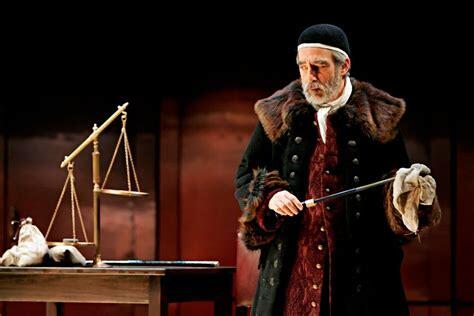
Attitudes and Ethics from The Merchant of Venice

Business Ethics
Strategic Information Systems
- American Airlines:
- booking and reservation system launched in 1976
- Chase Manhattan Bank (part of JPM-Chase):
- credit card processing launched in 1971
- Federal Express Corp (FedEx):
- tracking and sorting launched in 1980
- Merrill Lynch and Co. Inc. (now BofA Merrill Lynch):
- cash management system launched in 1978
- Proctor & Gamble Co.:
- customer response database launched in 1974
- Toys 'R' Us Inc.:
- Point of Sale (POS) inventory tracking launched in 1981
Ethical Strategic Information Systems - ESG


Ethical Strategic Information Systems - What Would Shakespeare Do?
“To business that we love we rise betimes and go to ‘t with delight.”
-Anthony and Cleopatra
___________________________________________________
Shakespeare was a very successful investor and businessman. In fact, the only surviving letter written to William Shakespeare is from Richard Quiney asking for a loan of £30 which would be worth about £30,000 in today’s money (Shakespeare.org.uk).
He started investing in various theatres in 1590 and diversified from there. His first investment was in Chamberlain’s Men later renamed King’s Men. He became a sharer in 1590 to 1594 meaning he’d get a share of the net profits; this has been estimated to be worth £60-70 per year or £60,000-£70,000 in today’s money. He also invested in the Globe Theatre from which he is estimated to have earned about £200 a year, or £200,000 in today’s money.
The investment in the Globe Theatre, one of London’s most successful theatres, meant that he got a cut of the box office and any publishing fees for his plays, essentially meaning he got paid twice for the same work.
He diversified his investments as well. For a period of around 15 years, Shakespeare bought a variety of goods: grains, malt, barley and stored them in a warehouse for resale. He definitely made huge profits as they were going through a period nicknamed the ‘little ice age’ – a period of poor harvest induced by terrible weather and harsh conditions across North America and Europe.
Further diversification saw Shakespeare enter the real estate market. In 1597 Shakespeare bought New Place in his hometown. New Place was the largest house in Stratford-upon-Avon, and it didn't end there. Eventually through investing the funds from his grain hoarding activities, he was able to invest in a portfolio of real estate making him amongst the largest landowners in Warwickshire (Reckard, 2013).
So, what would Shakespeare’s modern-day portfolio look like?
- Perhaps drawn by fame, he’d go on Shark Tank and invest in riskier start-ups.
- Perhaps drawn by huge gains and the thrill of investing, he’d sink his money in crypto.
- Or perhaps drawn by his love of information systems, he’d utilise a one-touch trading system.
I think all three are possibilities. Based on his entrepreneurial spirit and his past investments, I believe it’s safe to say that Shakespeare would not be one to ‘play it safe’ and throw all his money into the S&P500.
I am convinced that Shakespeare would love start-up investing based on his investments in the relatively new theatre scene back in the day. No doubt, he’d be a great guest shark on shark tank. The added fame would also drive more traffic to his works, a win-win – what he likes! He’d probably free up 35% of his portfolio for start-up / angel investing.
I doubt he’d become a serious crypto investor or trader, though I imagine he’d be curious to see what the hype is about. He’d probably allocate no more than 5% of his portfolio to crypto though this would likely have to be managed by someone else.
One touch trading is a new information systems-based product offered by various investment banks. It allows investors to choose the target price, time to expiration, and the premium to be received when the target price is reached. As they are quite new, Shakespeare would also be curious, he’d probably allocate up to 10% of his portfolio to one touch trading such that he has exposure to the stock market.
Another 10% would be held on the side-lines to ‘buy the dip’ or for loan opportunities. Like he’s done in the past, he would loan the money out to friends and acquaintances. He could even try pursue becoming a loan shark.
I imagine the remaining 40% of his portfolio will be invested in his preferred investment vehicle – property. This would likely be split over different countries with the majority of properties being oversees as the UK market has become so inflated.
_________________________________________
So we've
looked at Shakespeare's general business investments... but William has always
been first and foremost a man of the arts! So lets take a look at
William's ventures specifically into theater and production. 💬
They say do something you love 💓… and you’ll
never work a day in your life. According to one study in Wisconsin 70% of wealthy
investors take part in so-called ‘hobby investing’ – investing in things you
love the most (O'Herily, 2014). The main industries the study found was art, cars, antiques, and
jewelry. So now that we’ve looked at his investments in portfolios and trading…
let’s take a more specific look at the nature of Will’s business ventures production,
theatre and the arts.
Most plays and musicals are owned and
performed by touring companies. ‘Hamilton’, the box office hit has two touring
companies – a West End and Broadway. Production companies often acquire the licensing
rights to multiple plays and musicals. Some writers set up companies that exist
to produce and manage all that writer published works. Take for example Andrew
Lloyd Webber’s ‘Really Useful Group’ - owning rights to all his works from
Phantom to Cats 🐈. The Really Useful Group is a private limited company.
When Shakespeare hits the 21st
Century one of his first steps is to create his own production company.
Currently his work is in the Public Domain…meaning no one holds copyright to about
37 of his plays, 4 plays and several collaborative works.
As such a seasoned businessman, Shakespeare would doubtlessly buy out other West End and Broadway works. The thing is though, Broadway groups are known to be a close-knit group of investors. Stocks are rarely issued to the public (How to Invest in Broadway, 2022). Yet I imagine Shakespeare would integrate himself into this group. Investors often have close relationships with producers or are one themselves. They often have input into casting. It is a hands-on investment, one you don’t get into without personal interest – ‘hobby investing’ – as mentioned earlier. As the single most successful playwright ever - Shakespeare would doubtlessly see himself as qualified to invest and become involved in the industry. His work during his life as both creator and businessman allows him the experience and passion to venture into investment into production. 🧰
Thanks for reading folks!😃
- Jina, Rosie and Jason
Up Next:
References
Bloom,
H., Wright, W., Shakespeare, W. and Bloom, H., 2005. Shakespeare's
The merchant of Venice. New York:
Riverhead Books.
Fuergy.com.
2022. Welcome. [online] Available at: <https://www.fuergy.com/> [Accessed
16 February 2022].
Investingbroadway.com.
2022. How to Invest in
Broadway. [online] Available at:
<https://www.investingbroadway.com/howtoinvestinbroadway> [Accessed 3
February 2022].
Kettinger,
W., Grover, V., Guha, S. and Segars, A., 1994. Strategic Information Systems
Revisited: A Study in Sustainability and Performance.
MIS Quarterly, 18(1), p.31.
Leon,
H., 2020. This Startup Aims to Be the Airbnb of Renewable Energy Sharing.
[online] Observer. Available at:
<https://observer.com/2020/02/fuergy-renewable-energy-sharing/>
[Accessed 16 February 2022].
O'
Herily, P., 2014. Seventy Percent of the Affluent in Wisconsin Invest
in Their Hobbies: BMO Private Bank Study - Jul 17, 2014. [online]
Newsroom.bmoharris.com. Available at:
<https://newsroom.bmoharris.com/2014-07-17-Seventy-Percent-of-the-Affluent-in-Wisconsin-Invest-in-Their-Hobbies-BMO-Private-Bank-Study>
[Accessed 4 March 2022].
Pan,
S., Carter, L., Tim, Y. and Sandeep, M., 2022. Digital sustainability, climate
change, and information systems solutions:
Opportunities for future research. International Journal of Information
Management, 63, p.102444.
Schroeder,
K., 2021. 3 Reasons Why Business Ethics Is Important |
University of Redlands. [online] Redlands.
Available at:
<https://www.redlands.edu/study/schools-and-centers/business/sbblog/2019/may-2019/3-reasons
why-business-ethics-important/> [Accessed 10 February 2022].
Townsend,
S., 2022. 88% Of Consumers Want You To Help Them Make A Difference.
[online] Forbes. Available at:
<https://www.forbes.com/sites/solitairetownsend/2018/11/21/consumers-want-you-to-help-them-make-a-
difference/?sh=52c542de6954> [Accessed 10 February
2022].
Zhang,
D., Pan, S., Yu, J. and Liu, W., 2019. Orchestrating big data analytics
capability for sustainability: A study of air
pollution
management in China. Information & Management, p.103231.


Comments
Post a Comment