Epilogue: BardCast

Introducing Bardcast!
Hey all! We've come to the end of the blog, the Team and I had so much fun working on our posts and trying to give Shakespeare new life in the 21st Century (and trust me it hasn't been easy!). But all good things must come to an end and here we are! But we've one final thing we want to share with you:
Reading is great fun but you know what really helps you get your point, as well as tone and emotions, across more effectively? Voice messages! I love them and literally all my friends hate me for it (Top tip: if you don't want people to respond immediately, send them all a fifteen minute voice message and enjoy 5 hours of peace and quiet 😌).

A kind friend sent me this little number:
I get "there's a specific message someone is trying to share with you" vibes and it's so obviously start a podcast. And we did it: the team and I have an insightful discussion on Shakespeare and Strategic Information Systems, comprising our thoughts based on our blog posts and wonderfully moderated by Jason!
Find it here:
Podcasts and Strategic Information Systems
I really, truly couldn't resist taking a deeper dive into podcasting technology and the audio industry in general. I did a project for an up and coming audio news platform in 2020 - at the height of the pandemic where they saw intense growth as more people had the free time to consume new forms of content and this sudden boom for the audio industry has been fascinating to me!
Hear ye Hear ye with the Audio Media Industry
The audio media industry consists of live and music streaming services, radio, audio books, audio news and podcasts! There have been huge shifts in the audio media industry over the last decade as more and more users took to streaming services over downloading music and entirely new business models have popped up in that time. The meteoric rise that Spotify saw and the current stronghold it has on the music streaming industry (35% of the market share as of 2019) is truly unprecedented and was a catalyst for major shifts in the industry. Music streaming services now abound with Deezer, YouTube Music and Apple Music (I personally really enjoy SoundCloud) also being major players. Music streaming now accounts for 56% of the total recorded music revenue. In 2020, downloaded music saw $2.7 USD average revenue per user while music streaming came in at $27.5 USD (Statista - The Statistics Portal, n.d.).
The pandemic certainly had an effect on how we consumed non-music audio as more and more people were left at home with far more free time than they knew what to do with. For some the sounds, voices were a welcome distraction and were easier to process while completing other tasks than watching videos or reading physical books. Audio media provided a background ambiance that people were missing and which couldn't be replicated by music. The chatter of human voices and a reminder of social times were perfectly encompassed in a good podcast. Data from March 2020 from Edison Research and Triton digital found that around 176 million teenagers and adults in the US were listening to this type of audio media online, at least once every week, whereas in 2020 this figure sat at 169 million (Kelly, 2021).
Enter Cast Member: Podcast
Podcasts are fantastic tools for information sharing and have been around for a relatively longer time - around 2004 is when we can say they were coined and were developed by Adam Curry who used to be a video jockey at MTV. Alongside David Winer, a software developer, they created a tool which allowed them to download radio content broadcast online to their iPods! In 2005 "Podcast" was deemed Word of the Year by the New Oxford American Dictionary and in a year where large firms started to see the huge potential for growth in this area. Apple for one releasing iTunes 4.9 which had supports for podcasts. In 2013, Apple released their podcast subscriber figures which had jumped to 1 billion (Bishop, 2021)!
Podcasts are extremely popular today and in the non music category, they are the most listened to audio media content. In 2021, 80 million Americans were listening to podcasts each week - a 17% jump compared to the year before. For Spotify, the amount of time people spent listening to their podcasts had almost doubled! There are many different podcasts across a multitude of categories (I would know, I struggled to decide what heading our podcast fell under, and was so tempted to select Stand-up Comedy 🤠) but what gives them their appeal across a large demographic is the way that they allow complex topics to be more accessible to all through conversational settings. They're fun, especially if the hosts have a fantastic dynamic with one another and you can laugh along as if you're in the studio with them. A gentle and soothing voice hurt no one either! But they truly are a great way to share information and make concepts more accessible to all. Sometimes thoughts are better conveyed and understood through voice rather than dense, indigestible text (Kelly, 2021).
Can Businesses Harness Podcast Powers?
Now that we've established how popular podcasts are, their appropriateness as a means of sharing information and what makes then appealing to users, we can look at a few ways podcasts can be beneficial for businesses and their overall strategies - the majority focusing on branding, marketing and advertising ((Bubna, 2020); 9 ways a podcast can benefit your business - Ross Media Solutions, 2020; Frost, n.d.) :
1). Professionalism:
Plenty of firms and organisations have their own podcasts (including PwC, McKinsey and The Wall Street Journal). Podcasting can be a means to add a flair of professionalism to your brand and for sharing industry knowledge and showcasing proficiency. Customers will be more keen to do business with a firm who look like they know what they're talking about.
2). Connection:
As we've mentioned in the above section, there's a certain connection a person can form with the speakers in a podcast, even if they're not in the same room as them. It's the sound of a human voice which helps you relate better to certain topics and over time, form a connection with whoever the presenter/host/brand is.
3). Familiarity:
Similar to the above, an audience can become more familiar with your brand over time as podcasts are posted consistently and with great, quality content.
4). Convenience:
Listeners are likely to find podcasts more convenient in certain ways as you can listen to them at your own pace. Additionally, they can require less effort since you only need to listen to the words instead of staring at images on a screen - which could appeal to listeners who want to reduce their screen time (me! I feel like my eyes are gonna fall off, eye strain is real).
5). Competition:
Virtually every brand worth anything has a presence on Facebook or Instagram and there's stiff competition on these more mainstream social media platforms to make sure your content is seen. With podcasts, businesses can build a niche community on Spotify and iTunes and tap into a target demographic with less competition. Besides audiences who will consistently keep up to date with your podcast are likely to show more brand loyalty.
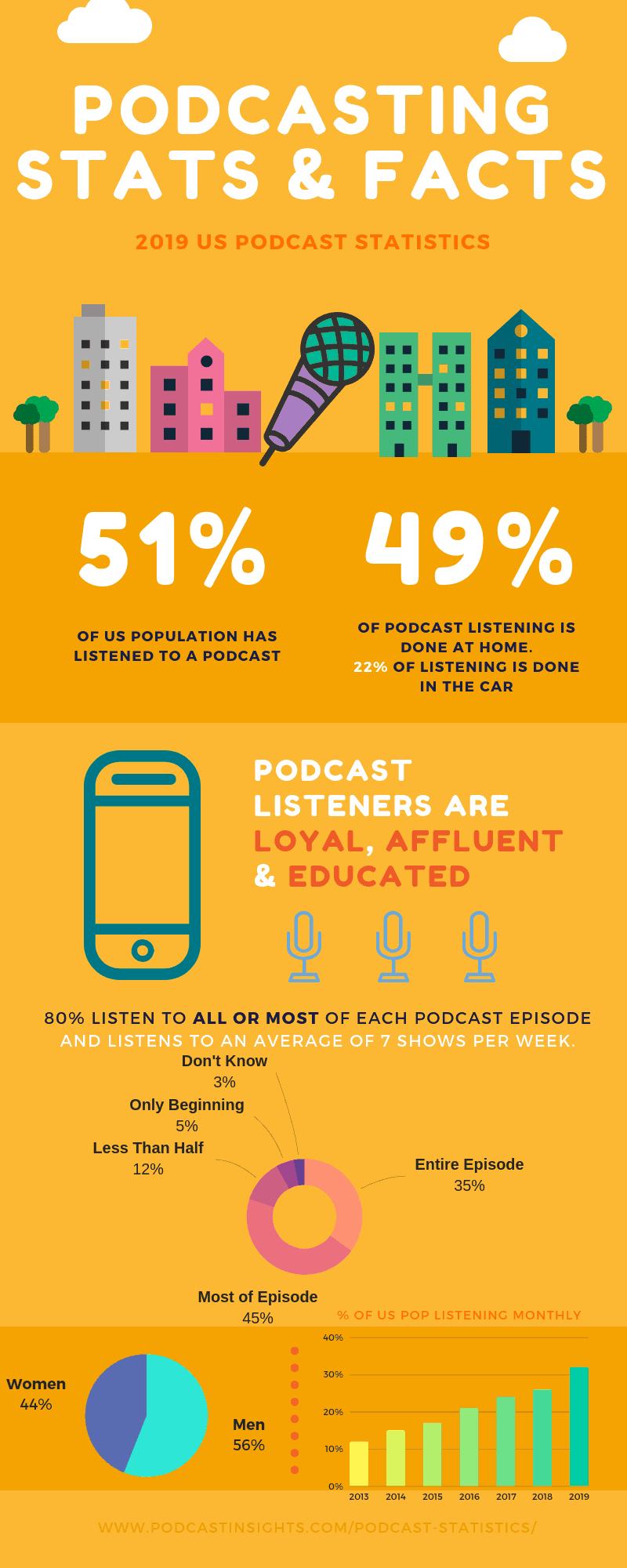
Source: PodcastInsights.com
Some Strategy-Based Podcasts!
- The Art of Business Wars - David Brown
- Inside the Strategy Room - McKinsey & Company
- HBR IdeaCast - Harvard Business Review
- Research and Perspectives - John Cotter
- TED Radio Hour - NPR
- Smart Women, Smart Power - CSIS
Just thought I'd plug a few other interesting strategy based podcasts for you to look at if interested!
In 2022, would Shakespeare Bother with Podcasts?
He might have, I think he would have struck a deal with Audible and narrated a few things for them. Maybe he'd play around with voice acting and creating audio versions of his plays like they did in the olden days on radio. Perhaps he'd set up his own podcast discussing his plays as an educational resource.
It's all very fun to think about, but Shakespeare's time has come to an end here and we have to leave him be. Thank you for joining us on this exploration - we hope you enjoyed it just as much as we did :)
- Jina
References:
Bishop, J., 2021. OneFinePlay. [online] Onefineplay.com. Available at:
<https://www.onefineplay.com/blog/a-brief-history-of
podcasting#:~:text=The%20term%20%E2%80%9Cpodcasting%E2%80%9D%20was%20coined,MP3%20players%20%2D%20all%20the%20rage.> [Accessed 1 March 2022].
Bubna, V., 2020. Podcast As Marketing Tool: It Creates Value For Listeners. [online] Entrepreneur.
Available at: <https://www.entrepreneur.com/article/358877> [Accessed 2 March 2022].
Frost, S., n.d. Difference Between Webcast & Podcast. [online] Small Business - Chron.com. Available
at: <https://smallbusiness.chron.com/difference-between-webcast-podcast-69397.html> [Accessed 2
March 2022].
Kelly, H., 2021. [online] washingtonpost.com. Available at: <https://www.washingtonpost.com/technology/2021/03/15/audio-time-clubhouse-podcasts/> [Accessed 1 March 2022].
Ross Media Solutions. 2020. 9 ways a podcast can benefit your business - Ross Media Solutions.
[online] Available at: <https://www.rossmediasolutions.com/2020/11/25/9-ways-a-podcast-can
benefit-your-business/> [Accessed 2 March 2022].
Statista. n.d. Statista - The Statistics Portal. [online] Available at: <https://www.statista.com/markets/417/topic/475/audio/#overview> [Accessed 1 March 2022].


Comments
Post a Comment